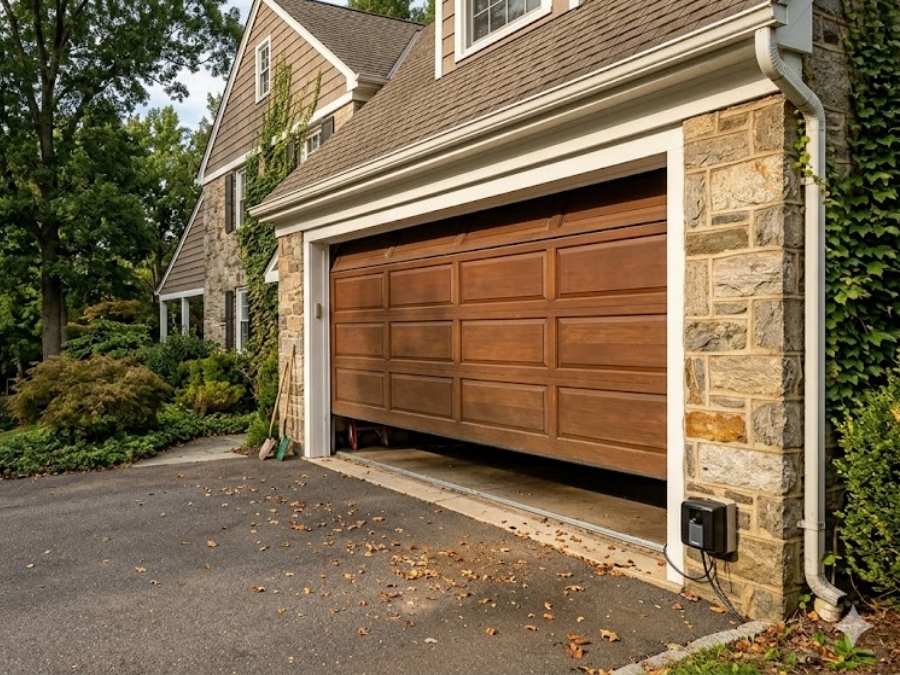
Why Does My Garage Door Keep Reversing Before It Closes in Bucks County?
Quick Answer:
A garage door that reverses before closing is usually caused by misaligned safety sensors, an obstruction in the door’s path, or resistance detected by the opener. In Bucks County homes, common triggers include debris blocking sensors, track misalignment, or weather-related changes affecting door movement. The system reverses as a safety feature to prevent damage or injury.
Quick Checklist: 5 Reasons Your Garage Door Is Reversing
If you’re looking for the fastest answer, these are the most common causes we see across Bucks County homes:
- Blocked photo-eye sensors from dust, leaves, or cobwebs
- Misaligned tracks from minor bumps or shifting over time
- Sunlight interference affecting the safety sensor beam
- Spring imbalance making the door feel too heavy to close
- Force or limit settings reacting to seasonal changes
Sometimes the door reverses because the opener thinks the floor is higher than it actually is. In older Bucks County garages where the concrete floor has settled or ‘heaved’ over decades, the door hits the ground too early. The opener thinks it hit a stray object and reverses to avoid damage. A simple ‘travel limit’ adjustment is often all that’s needed.
The #1 Culprit: Safety Sensor Obstructions
The first thing I check on almost every service call is the photo-eye sensors near the bottom of the tracks. These sensors create an invisible beam across the garage opening. If that beam is interrupted—even slightly—the door will reverse immediately.
What catches homeowners off guard is how sensitive these systems are. It doesn’t take a large object to trigger the reversal. A thin layer of dust, a spiderweb, or even a single leaf can be enough. I’ve been on jobs where clearing a barely visible obstruction solved the entire problem.
A recurring pattern we find in Ambler’s borough layouts is because of the environment. Detached garages, alley access, and mature tree coverage all increase the chances of debris interfering with the sensor beam. In tighter borough layouts, it’s also easy for sensors to get knocked slightly out of alignment without anyone realizing it.
When the Door Detects Resistance
Not every reversing issue comes from what the system “sees.” Your garage door opener also monitors how the door moves.
If the system detects resistance while closing, it assumes something is underneath and reverses as a safety precaution. The challenge is that this resistance often isn’t obvious.
It can come from subtle issues like friction in the track, worn rollers, or slight warping in the door panels. In Bucks County, humidity plays a role here—especially near the Wissahickon Creek watershed. Older wooden doors can absorb moisture during the summer months, expand slightly, and create just enough drag to trigger a reversal.
Track Alignment and Everyday Damage
Garage door tracks need to stay straight and properly aligned for the system to operate smoothly. Even a minor bend can interfere with the door’s movement.
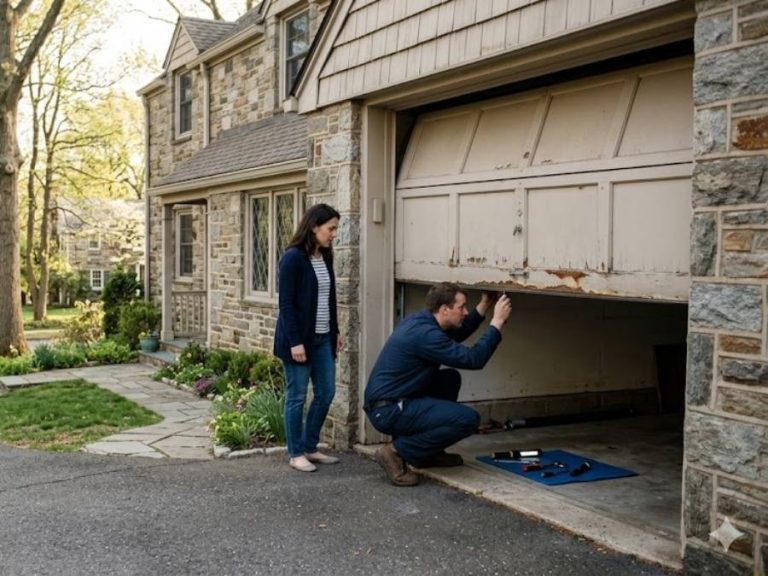
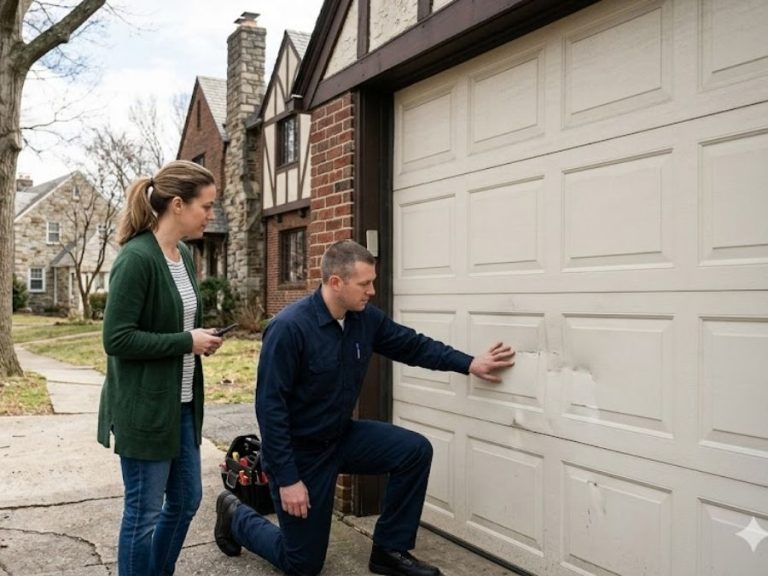
In areas with alley-access garages, like parts of Ambler, it’s common for tracks to get lightly bumped by vehicles. The damage is often small and easy to miss, but it doesn’t take much to create resistance. I’ve seen doors reverse repeatedly because of a dent no wider than a thumb.
Debris is another common issue in this region. Leaves, twigs, and gravel can settle into the track and disrupt the door’s path without being immediately visible.
Environmental Factors: The “Wissahickon Effect”
Homes in Bucks County deal with a specific mix of environmental conditions that directly affect garage door performance.
Humidity is a major factor. Areas influenced by the Wissahickon Creek tend to have higher moisture levels during the summer, which can cause wood doors to swell and increase friction. Over time, that added resistance can lead to repeated reversing issues.
Road salt is another contributor, especially for homes near major roads like Bethlehem Pike. Salt exposure accelerates corrosion on lower panels and hardware, which can create uneven movement or added resistance during operation.
Tree coverage also plays a role. Bucks County’s mature canopy means more leaves, twigs, and debris finding their way into tracks and sensor paths throughout the year.
When Weather Changes Your Door’s Physics
Seasonal temperature swings don’t just affect comfort—they change how your garage door system behaves.
During winter, metal components contract, including the torsion springs that act as the lifting force behind your door. When those springs tighten in cold weather, they can lose efficiency, altering how the door moves and how the opener responds.
From a technical standpoint, your opener is calibrated to a specific force range. If the door’s weight $W$ begins to exceed the counterbalance force $F_{spring}$—due to spring fatigue or temperature-related changes—the system detects the increased load and reverses as a safety measure.
This is why many homeowners notice issues appear suddenly during colder months, even if the door worked perfectly in the fall.
A Less Obvious Cause: Sunlight Interference
One issue that surprises a lot of homeowners is sunlight interference.
If your garage faces east or west, there are times of day when direct sunlight can hit the safety sensors at just the right angle and disrupt the beam. The system interprets this as an obstruction and prevents the door from closing.
This is more common in open suburban layouts like Maple Glen and Lower Gwynedd, where garages have direct sun exposure without shade from nearby structures.
DIY Checks vs. Professional Repairs
There are a few things homeowners can safely check before calling for service. Cleaning the sensors, clearing debris from the tracks, and visually inspecting the system for obvious obstructions are all reasonable first steps.
However, it’s important to recognize where the line is.
If the door feels unusually heavy, moves unevenly, or you’ve heard a loud snap, the issue likely involves springs or cables. These components operate under high tension and are not safe to repair without proper tools and training.
In those cases, continuing to run the door can make the problem worse—or create a safety risk.
Why This Problem Is So Common in Bucks County
Garage doors in this area face a unique combination of factors: older housing stock, detached garage setups, narrow access points, and constant exposure to weather and debris.
Because of that, reversing doors aren’t unusual—they’re one of the most common service calls we see. The good news is that once the root cause is identified, most of these issues are straightforward to fix.
Need Garage Door Repair in Ambler or Bucks County?
If your garage door keeps reversing and the cause isn’t obvious, it’s worth having it inspected before it turns into a larger repair.
For homeowners in Ambler, Maple Glen, Lower Gwynedd, and across Bucks County, this is a routine issue we diagnose every day. Whether it’s sensor alignment, track damage, or a balance problem, the solution is usually simpler than it seems once you know where to look.
Final Thought
A garage door that won’t stay closed isn’t being difficult—it’s doing exactly what it was designed to do.
The system is detecting something that doesn’t look or feel right. The sooner that signal is understood and addressed, the easier it is to restore safe, reliable operation. Look at the light on your motor unit. If it flashes 10 times after reversing, the system is explicitly telling you the sensors are the culprit. If it doesn’t flash but still reverses, we look at mechanical resistance.