
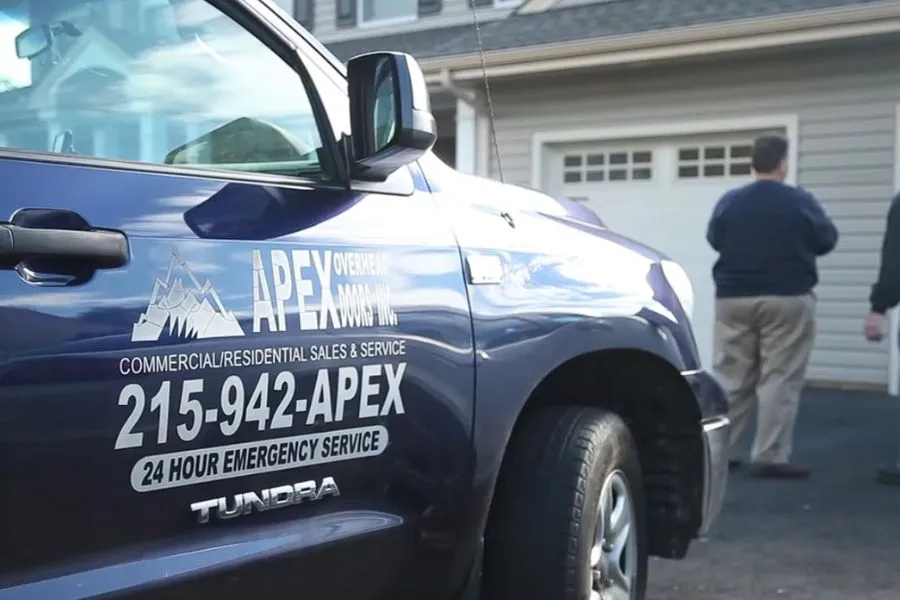
Garage Door Panel Replacement
Damaged garage door panel? We replace sections safely and restore balance before it leads to bigger issues or full door failure.
Get A Free Quote NowGarage Door Panel Replacement
When a garage door panel bends, cracks, or starts to separate, it usually doesn't happen all at once. What starts as a small dent or a faint gap between sections turns into a door that won't close evenly or suddenly sounds different every time it moves.
This is one of those problems that looks minor until the entire door starts reacting to it. Once a section loses its structure, everything around it compensates, and that's when the behavior changes. If your door is starting to sag, hesitate, or show visible damage, call Apex Overhead Doors at (215) 942-2739 and we'll take a look before it spreads further.
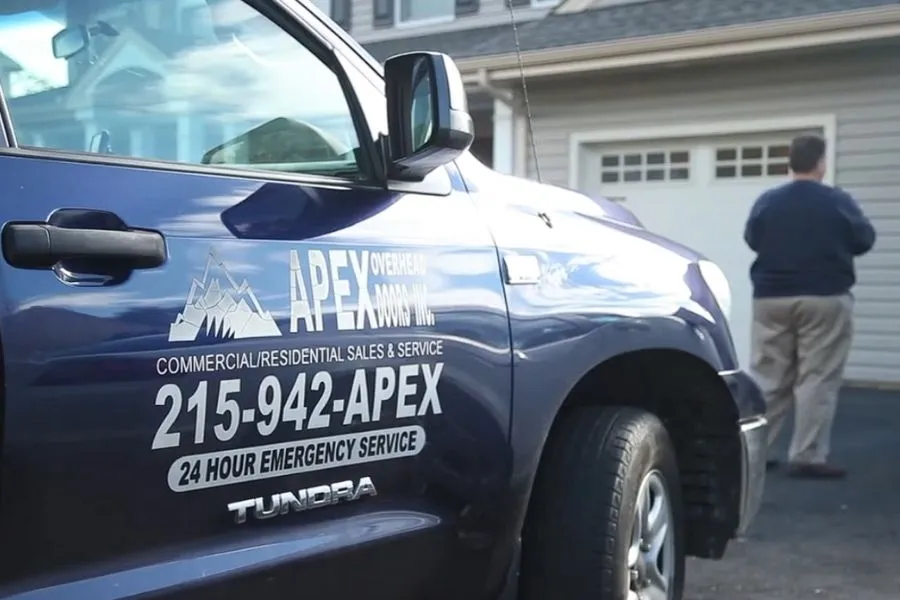
Why a Single Panel Starts Affecting the Whole Door
Garage doors aren't one solid piece.
They're a system of connected sections that rely on each other to stay aligned and balanced. We usually see panel failure begin with repeated stress in the same spot. That might be from daily cycling, uneven spring tension, or resistance somewhere along the track. Over time, that pressure settles into the panel itself. What happens next is the internal structure starts to give. Hairline fractures form the internal stiles-the vertical 'ribs' inside the door that give it strength. When these snap, the door loses its 'spine,' making it sag in the middle. In most garages, the next failure point is right at those hinge attachment points, because that's where the lifting force transfers every time the door moves.
We also frequently see what's called a "center buckle," a vertical crease running down the panel. This usually happens when the opener tries to lift the door while the bottom section is stuck to the ground or blocked. The force has nowhere to go, so it pushes into the center of the panel. Once this starts, it rarely stops on its own. The panel continues to weaken, and the rest of the door starts adjusting around it.
What It Takes to Replace a Panel Without Causing New Problems
Replacing a section is about restoring balance, not just swapping out a damaged piece.
Matching the Structure and Weight
Every panel has a specific weight, thickness, and connection style. If the replacement doesn't match, the door won't lift evenly. We usually see problems when replacement panels don't match the original door. What happens next is the opener starts straining or reversing because the system is no longer balanced the way it was designed.
Rebalancing the Door After Replacement
Once a new panel is installed, the weight distribution changes. In most garages, the next issue shows up in the springs. The garage door may feel heavier, or the opener starts doing more work than it should. We correct that by rebalancing the system so the door lifts evenly again.
Making Sure the Door Tracks Straight Again
A damaged panel often pulls the door slightly out of alignment. What happens next is the door starts tracking unevenly, especially through the curve. We check how the door moves from bottom to top and make sure it stays centered throughout the cycle. If you're seeing early signs and not sure how far it's gone, call us at (215) 942-2739 and we'll take a look before it turns into something bigger.
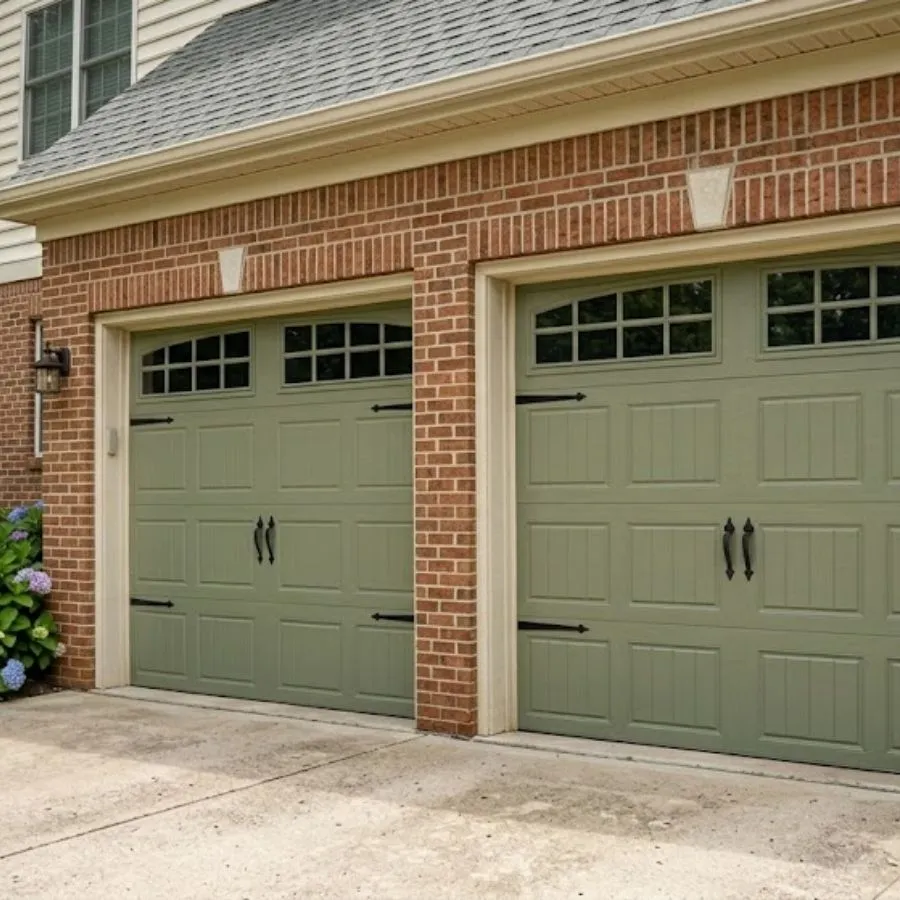
Why This Is One of the Riskier Garage Door Repairs
Panels are tied directly into parts of the system that carry tension, especially near the bottom section.
This is one of those problems that looks like something you can handle until you get into it. We've seen situations where someone tries to remove a damaged section without realizing the bottom corner brackets are connected to cables under extreme tension. Once this starts, it can shift quickly.
A compromised panel can fold inward while the door is overhead, or the system can release force in a way that's hard to control. We usually see DIY attempts go wrong when someone tries to flatten a dent or reinforce a panel. That stretches the material or adds weight in the wrong place, which creates more stress instead of solving the issue.
How Panel Damage Spreads Through the System
A single damaged section doesn't stay isolated for long.
In our area, we often see the bottom panel fail first. Between road salt in the winter and the way the ground shifts during freeze-thaw cycles, the bottom rail can oxidize or lose its seal. In Bucks County, when the ground heaves in February, your door might not sit flush anymore. If the opener keeps forcing it down against that uneven ground, it creates the very stress that snaps those internal stiles. That allows moisture to get into the panel, adding weight and weakening the structure.
What happens next is the door becomes uneven. In most garages, the opener is the first component to feel it. It starts compensating for the imbalance, which leads to gear wear or motor strain. From there, the stress moves into the tracks and rollers. The door doesn't move smoothly, which adds more resistance and pressure to the remaining panels. This is one of those problems that looks manageable until multiple sections are affected. At that point, the cost of replacing panels can approach the cost of replacing the entire door.
The Point Where It Stops Being Optional
There's usually a moment where the issue becomes hard to ignore.
We've seen this in areas near the intersections where garage doors get used constantly and small issues show up quickly. You might notice the door reversing when it tries to close, or it feels heavier than it used to when lifting manually. Sometimes it's a visible crack running across the width of a section, or damage from a vehicle impact that makes the door hard to secure.
What happens next is the door becomes unreliable. It may not close fully, or it puts more strain on everything else every time it runs. If you're at that point, call us at (215) 942-2739 and we'll help you figure out whether a panel replacement still makes sense or if it's time to look at a different solution. Even if we source the exact manufacturer and model, your existing door has likely been "weathered" by the sun. We offer professional color-matching advice and, in some cases, can help you determine if a fresh coat of paint or a full door upgrade is the better visual solution.
Let's Fix the Cause, Not Just the Damage
If your garage door panel is bent, cracked, or starting to separate, it's usually not just that one section. It's a sign the system is already under stress. We'll look at what caused it, not just replace what's visible, so the problem doesn't come right back.
Call (215) 942-2739 and we'll get your door moving the way it should again.